Why Your AI Agent Pipelines Will Fail Without Declarative DSLs
Imperfect AI agents fail silently at 2 AM. Here's why your Python loops are lying to you—and how declarative DSLs save your budget, sanity, and sleep.

Let me save you six months of pain.
You’ve built an AI agent pipeline. Maybe it’s a customer support bot that books refunds. Maybe it’s a research agent that scrapes the web and summarizes PDFs. Feels powerful, right?
Until Tuesday at 2 AM, when your agent decides to call the same API 4,000 times because a user asked “keep trying until it works.”
I’ve debugged that exact nightmare. And here’s the hard truth I learned: your imperative Python code is lying to you. It looks simple. It looks controllable. But the moment you add memory, tool calling, and loops, your agent becomes a black box that nobody understands—least of all you.
The fix? Declarative DSLs.
I know. Another acronym. But stick with me. This isn’t theory. This is the difference between sleeping through the night and waking up to a $12,000 OpenAI bill.
The Real Failure Nobody Talks About
Most people think AI agents fail because of bad prompts or weak models.
Nope.
They fail because the pipeline logic is invisible.
Let me paint you a picture.
You write a simple agent loop:
while not done:
    thought = llm.call(messages)
    if thought.needs_tool:
        result = call_tool(thought.tool_name)
        messages.append(result)
    else:
        done = True
Looks innocent. But what actually happens at runtime?
- The model decides to retry a failed API call 47 times.
- The agent forgets what it already tried and repeats itself.
- Two tools conflict because there’s no rule about priority.
- The conversation goes 30 turns deep and you can’t trace why.
I watched a team lose three weeks debugging an agent that would randomly skip the “confirm before booking” step. The reason? The model interpreted an empty user message as implicit consent. Their pipeline had no declarative rule saying “confirmation is mandatory.”
Imperative code says how. Declarative says what. For agents, you need the second one desperately.
What a Declarative DSL Actually Gives You
Let me define this in real terms.
A Declarative Domain-Specific Language (DSL) is just a structured way to write agent rules that don’t hide inside Python conditionals. Think YAML, JSON, or a small custom syntax. But the format matters less than the mindset.
Here’s what a declarative rule looks like:
- name: require_confirmation
  trigger: tool_call == "book_appointment"
  condition: confirmation_received == false
  action: block_and_ask_user
That’s it. No hidden branches. No model deciding to be clever.
When you use a DSL for your agent pipeline, three things happen instantly:
1. You can see the entire workflow on one page.
No more jumping between eight files. Your routing, guardrails, and fallbacks live in one declarative spec. A new team member can understand it in fifteen minutes.
2. The model stops guessing.
Models are terrible at following implicit rules. But give them a DSL that your system enforces outside the model, and suddenly the model can focus on what it’s good at—generation, not governance.
3. You can test without running the LLM.
This is huge. With a declarative spec, you write unit tests against the DSL itself. You don’t need to burn API credits to know that “confirmation always blocks booking.” That alone saves my teams thousands per month.
A Real Failure I Fixed With a DSL
Let me give you a concrete story.
I was called into a company that built an expense report agent. Employees would message things like “did I spend $45 on coffee last week?” and the agent would search emails, Slack, and credit card APIs.
Cute. Except it kept approving fake receipts.
Why? Their imperative pipeline had a function called validate_receipt() that the model could optionally call. Sometimes it did. Sometimes it didn’t. No enforced rule.
I rewrote their pipeline using a declarative DSL called Stateflow (open source, worth looking up). The new rule was:
- name: receipt_mandatory
  stage: before_approval
  required_tool: validate_receipt
  failure_action: reject_with_explanation
That’s it. The agent could no longer approve anything without running validation. The model hated it at first—it kept trying to skip—but the DSL doesn’t care. The pipeline enforced the rule.
Approval errors dropped to zero. And the best part? The product manager could read the DSL and confirm the logic without asking engineering.
How to Start Without Rewriting Everything
You don’t need to throw away your current agent. You just need to wrap it.
Here’s what I actually do—and you can do this next week:
Step 1 – Find your top three implicit rules.
What does your agent do that should always happen but currently only usually happens? Write those down in plain English.
Step 2 – Pick a simple DSL format.
Start with YAML. Just YAML. Don’t build a parser yet. Write your three rules as YAML objects with trigger, condition, action.
Step 3 – Add a lightweight enforcement layer.
Before your agent calls any tool, run it through a small function that checks the DSL rules. If a rule applies, enforce it. This takes an afternoon to code.
I promise you: within a week, you’ll find yourself adding more rules. Because you’ll realize how much implicit logic your agent was silently mishandling.
The Brand Takeaway (This Is How You Get Noticed)
Here’s what I want people to think when they see your name:
“This person builds agents that don’t surprise you at 2 AM.”
Reliability is the new creativity. Every junior developer can chain together GPT calls. But the people who get promoted—who get invited to speak, who get the consulting calls—are the ones whose agents behave predictably.
Declarative DSLs aren’t sexy. But they are the difference between a demo and a production system.
You want to be known as the person who actually ships agents that last? Stop writing spaghetti loops. Start declaring what you mean.
Your future self—awake at 2 AM with no surprise bills—will thank you.
One last thing from me:
Pick one rule your agent violates regularly. Write it in YAML today. Just the act of writing it declaratively will show you three other rules you forgot. Try it. Then tell me I’m wrong. I’ll wait.
Written by someone who has debugged agent loops at 2 AM so you don’t have to.

Iria Fredrick Victor
Iria Fredrick Victor(aka Fredsazy) is a software developer, DevOps engineer, and entrepreneur. He writes about technology and business—drawing from his experience building systems, managing infrastructure, and shipping products. His work is guided by one question: "What actually works?" Instead of recycling news, Fredsazy tests tools, analyzes research, runs experiments, and shares the results—including the failures. His readers get actionable frameworks backed by real engineering experience, not theory.
Share this article:
Related posts
More from AI
May 27, 2026
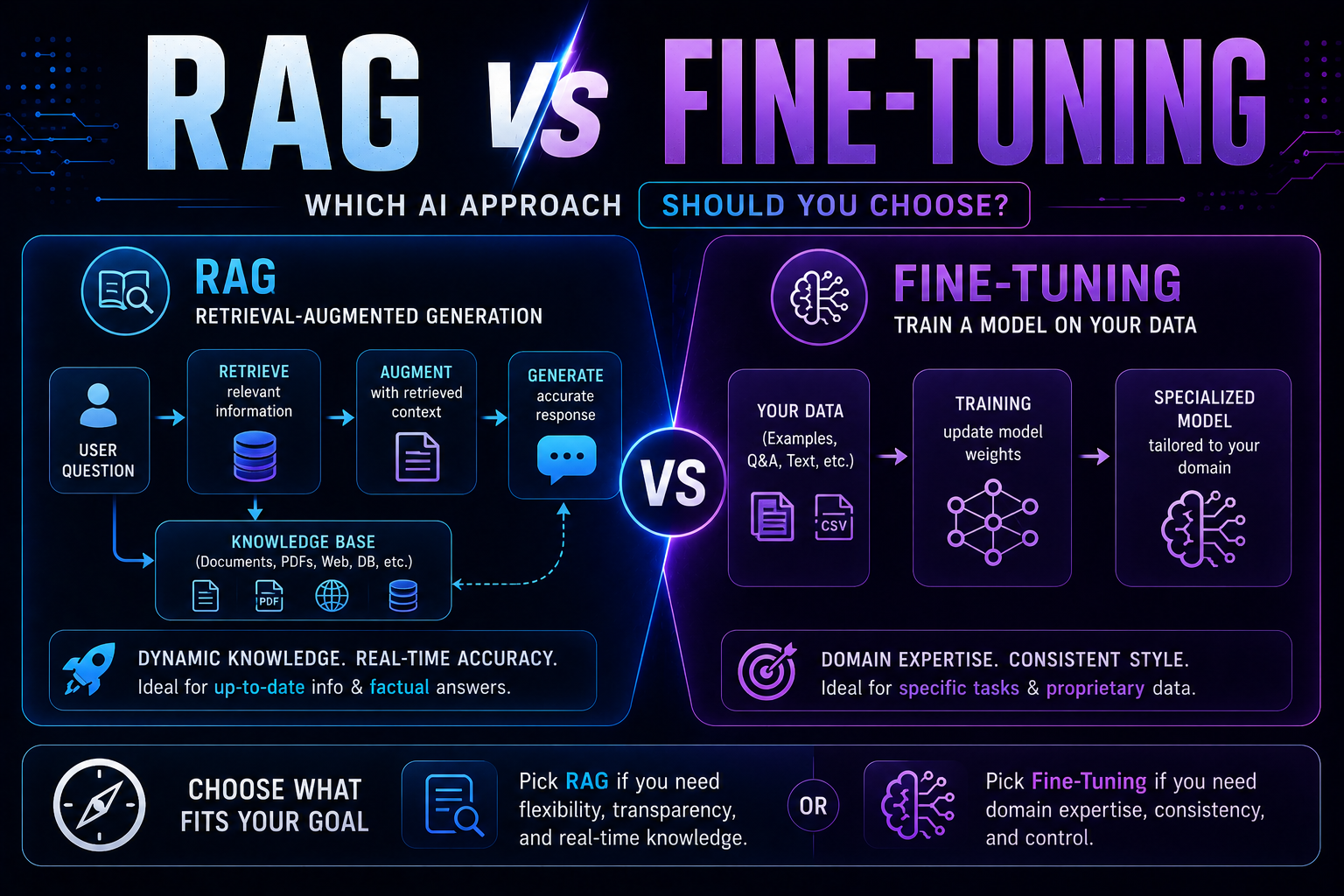
208RAG vs fine-tuning in 2026 — a practical guide covering when to use each, how both work with real code examples, the form vs facts distinction, hybrid approaches, true costs, and a decision framework to choose the right AI architecture for your use case.
May 22, 2026
2105 red flags every business must spot before buying AI software — covering demo manipulation, data privacy gaps, missing error handling, AI-washing, and lock-in contracts, with a 4-week vendor evaluation framework.

May 13, 2026
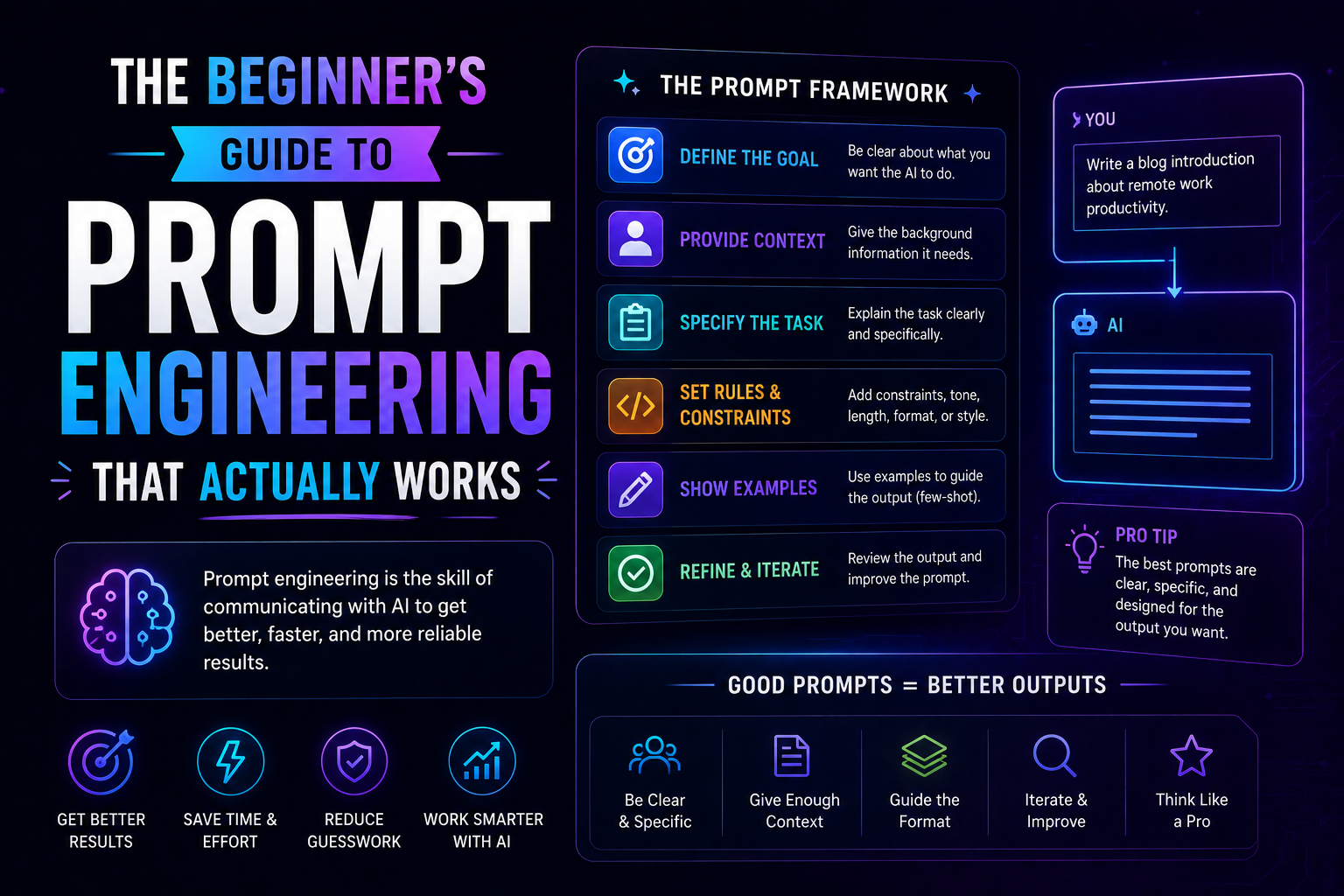
1165The beginner's guide to prompt engineering that actually works in 2026 — covering the RCTF framework, chain of thought, few-shot examples, output contracts, and model-specific tips for Claude, GPT-5, and Gemini.